
Do I Need a CPA to Be a Bookkeeper?
If you’ve been dreaming of launching a bookkeeping business, you might be asking, “Do I need a CPA to be a bookkeeper?” The short answer is: no. In fact, bookkeepers are not regulated like CPAs, and you do not legally need a CPA license to handle bookkeeping work. As one bookkeeping coach bluntly puts it, “You definitely do not need a CPA to get into a bookkeeping business”. Bookkeepers often start with a high school diploma or GED and learn the ropes on the job. Unlike CPAs (Certified Public Accountants), who must complete college hours and pass a rigorous exam, bookkeepers typically don’t have formal licensure requirements.
That said, CPAs and bookkeepers play different roles. We’ll explain the differences between bookkeepers and CPAs, what are the bookkeeping business legal requirements (spoiler: almost nothing beyond the basics), and how real people have built successful bookkeeping careers without ever earning a CPA license. We’ll also give guidance on education, optional certifications, and starting your own business. You’ll clearly see that the answer to “do I need a CPA to be a bookkeeper” is a resounding no, and you’ll know exactly how to move forward in starting your bookkeeping business.
Bookkeepers vs. CPAs: Roles and Responsibilities
The roles of a bookkeeper and a CPA differ significantly in education, scope of work, and legal authority. CPAs are state-licensed accountants who must meet strict requirements, while bookkeepers handle day-to-day financial records and generally have fewer formal requirements. For example, Indeed notes that “bookkeepers may not have formal accounting training” and “may not need a college degree”, whereas accountants and CPAs usually have degrees and further credentials. In practice, bookkeepers typically record daily transactions, reconcile accounts, process payroll, and generate basic reports. Accountants might prepare taxes and budgets, and CPAs go even further: they can conduct audits, sign off on financial statements, and represent clients to the IRS.
Putting it simply: Bookkeepers keep the records up to date; Accountants compile and interpret the records; CPAs are licensed professionals who can audit records and provide advanced financial advice. Bookkeepers “record financial transactions, reconcile records with bank statements, submit payroll, create monthly reports”, while accountants “prepare advanced financial reporting analysis and create yearly budgets”, and CPAs can do all that plus audit financial statements and deal with the IRS. Another source points out that CPAs are “responsible for producing tax returns and financial reports, providing auditing services” and must have a college degree and state license, whereas bookkeepers simply maintain the data.
In practical terms, then, bookkeepers work under lower liability and handle routine tasks. Bookkeepers don’t do audits or tax filings, they have the least liability of the three roles. CPAs, on the other hand, carry more responsibility (and often higher pay) because of their advanced work.
Here’s a quick summary of the key differences:
- Education and Training: CPAs typically need a bachelor’s degree (plus extra credits) and must pass the CPA exam. Bookkeepers often start with a high school diploma or equivalent and learn on the job. Many bookkeepers build skills via short courses or vocational programs rather than full college degrees.
- Certification/Licensing: CPAs are licensed by state boards and must maintain that license. Bookkeepers are not licensed professionals – there’s no government license required to call yourself a bookkeeper. (In fact, accounting.com bluntly states that “the bookkeeping field does not mandate any certifications or licenses”.)
- Scope of Work: Bookkeepers manage day-to-day records (invoices, receipts, payments, payroll, etc.). CPAs can prepare taxes, audit financial statements, and advise on complex financial issues. Accountants (not necessarily CPAs) typically prepare financial reports.
- Client Services: Only CPAs can officially sign and file audited financial reports or represent clients before the IRS. Bookkeepers generally prepare and organize documents but would partner with a CPA or tax professional for filings and audits.
- Liability: Bookkeepers have the lowest legal liability among these jobs because they don’t handle audits or tax filings. CPAs have the highest liability due to the oversight role they play.
- Earnings: CPAs earn more on average than bookkeepers, but experienced bookkeepers – especially those who specialize (for example in serving a niche industry or mastering a certain software) – can still make very good money.
In short, a CPA license gives you the right to do more (especially taxes and audits) and can boost client confidence, but it is not required for bookkeeping itself. Many successful bookkeepers around the country never went to accounting school or became CPAs. Their clients value accuracy, reliability, and expertise with accounting software over any particular credential.
Education and Legal Requirements for Bookkeepers
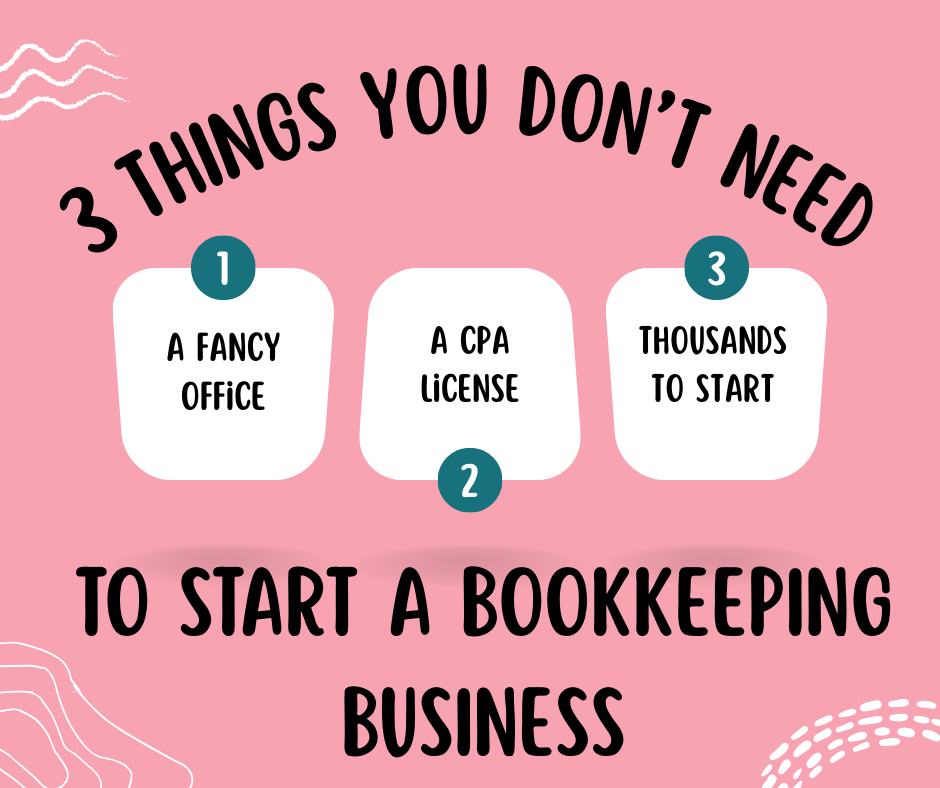
Legally speaking, bookkeeping is largely unregulated. Unlike CPAs, who are certified by state boards, the title “bookkeeper” is not protected by law. You can call yourself a bookkeeper and start offering services without a license or formal certification. The U.S. Bureau of Labor Statistics explicitly notes that entry into bookkeeping jobs varies: Some employers require or prefer workers have taken college courses or have a degree… Others may hire workers who have a high school diploma. These workers also learn some of their skills on the job. In practice, this means that a high school diploma (or equivalent) plus solid training or experience is often enough to land an entry-level bookkeeping role.
The field “does not mandate any certifications or licenses”. In other words, no specific degree or certificate is required by law to be a bookkeeper. Many bookkeeping professionals do pursue further education (some get an associate’s or bachelor’s in accounting for more opportunities), but it isn’t a legal necessity.
The only indirect requirements come from related services. For example, if you also want to prepare and file tax returns, the IRS requires tax preparers to register (anyone can get a PTIN – Preparer Tax Identification Number – by taking a short IRS online course). But only CPAs (or Enrolled Agents or attorneys) can officially sign certain tax forms or represent clients in IRS audits. Similarly, to perform audits or reviewed financial statements, you need a CPA license.
Bottom line: If you stick to core bookkeeping (data entry, ledgers, reconciliations, basic reports, payroll), no CPA license or even accounting degree is legally required.
That said, there are optional credentials and training paths for bookkeepers. None are mandatory, but they can bolster your skills and credibility. For example:
Professional Bookkeeping Certifications
Organizations like the American Institute of Professional Bookkeepers (AIPB) and the National Association of Certified Public Bookkeepers (NACPB) offer voluntary certifications. These include the Certified Bookkeeper (CB) from AIPB and the Certified Public Bookkeeper (CPB) from NACPB. Earning one of these shows clients that you’ve passed exams on bookkeeping standards. However, the BLS and accounting guides emphasize that these are optional credentials. According to BLS, “certification is not usually required” for bookkeeping roles.
Software Certifications
Many bookkeepers also become certified in popular accounting software. For instance, Intuit’s QuickBooks offers a free ProAdvisor program and certification, and Xero has training courses. Becoming certified in your chosen software (like QuickBooks Online) can demonstrate that you have the professional skills to help other companies with their business finances. These certifications aren’t legally mandated, but they often help land clients and jobs in practice.
Degrees and Courses
While not required, a formal education can help. An associate’s or bachelor’s degree in accounting or business makes you a stronger candidate for some employers, and the coursework builds a solid foundation. Even short courses in accounting fundamentals or bookkeeping principles (offered by community colleges or online programs) can be very useful. If you do go the degree route, you’ll gain knowledge of financial statements, taxes, and other topics that small clients value.
To summarize, you do not need a formal license or CPA credentials to become a bookkeeper in the U.S. Typically you need at least a high school diploma (more advanced education is optional but helpful) and a willingness to learn the accounting systems. You can start offering bookkeeping services as soon as you have the basic skills. However, to stand out, many bookkeepers do choose to get certifications (CB, CPB, QuickBooks, etc.) or higher education to boost their credentials.
Practical Differences: Skills, Tools, and Day-to-Day Work
Beyond legalities, think about the day-to-day differences. As a bookkeeper, you’ll focus on routine financial record-keeping: posting transactions, reconciling bank statements, managing invoices and payroll, and generating monthly profit/loss summaries. You’ll use accounting software and spreadsheets heavily. In contrast, a CPA’s day might involve preparing detailed tax returns, conducting audits, writing financial advice, or representing clients in front of the IRS.
Here’s another way to see it:
Bookkeeping tasks include updating the general ledger, recording all payments and income, verifying that records meet requirements, managing payroll accounts, organizing receipts and invoices, producing regular reports, etc. These are more clerical and operational tasks, though still vital to business health.
Higher level accountants or CPA tasks may include creating financial statements (balance sheets, income statements), analyzing expenses, filing tax returns, consulting on budgeting, and ensuring compliance with tax law. CPAs often work on forward-looking advice and official filings.
In terms of skills, bookkeepers need attention to detail, comfort with software (QuickBooks, Xero, etc.), basic math, and organization. CPAs also need those skills but in addition usually study advanced topics like forecasting, tax law, and communication for advising clients.
It’s also worth noting software tools. Modern bookkeeping heavily uses cloud-based accounting programs. A lot of small businesses run QuickBooks Online or similar, so aspiring bookkeepers often learn these platforms first. Familiarity with these tools is more important than a CPA license for the work itself.
Finally, consider liability and responsibility. Because bookkeepers don’t sign audited statements or complex tax filings, they generally face less legal risk than CPAs. Bookkeepers have the least liability of the three roles, since they aren’t conducting official audits or tax attestations. This means minor errors can often be corrected in the normal bookkeeping process without the same penalties a CPA might face in an audit. However, as with any financial role, accuracy is still crucial – so many bookkeepers carry professional liability insurance when running their own business to protect against mistakes.
Starting Your Bookkeeping Business
Even without needing a CPA license, you still want to prepare and plan carefully to launch a successful bookkeeping business. Here are key steps and tips, drawing on career guides and real-world advice:
Build Your Skills
Start with the basics. A high school diploma or GED is usually enough to begin learning bookkeeping. Take courses in accounting principles and software (many community colleges and online programs offer bookkeeping classes). Practice with QuickBooks, Xero, or other tools – many vendors offer free training. If you have zero experience, consider volunteering or interning at a small business, or working as an assistant, to see real bookkeeping tasks. On-the-job experience is highly valuable as well before starting a bookkeeping business.
Optional Certifications
While not required, certifications can show clients that you know your stuff. Consider becoming a QuickBooks ProAdvisor or getting certified in a similar popular software. Also look into professional bookkeeping credentials: for example, AIPB’s Certified Bookkeeper (CB) or NACPB’s Certified Public Bookkeeper (CPB). These require passing exams but can distinguish you. Similarly, some bookkeepers earn an accounting associate’s degree or certificate to bolster their knowledge.
Learn the Niche
Decide which clients you want to serve. Many new bookkeepers pick a niche (e.g. restaurants, e-commerce stores, contractors) and learn any industry-specific rules. Specializing can help you market your services. Also define your scope of services upfront: Will you just do monthly bookkeeping, or also manage payroll and invoicing? Setting clear service packages helps clients know what you do.
Set Up Your Business
Even though no CPA license is needed, you will need to legally form your business. Commonly, bookkeepers set up as a sole proprietorship or LLC. Pick a unique business name and register it. For ideas here are 50 bookkeeping business name ideas for freelancers. Get an Employer Identification Number (EIN) from the IRS for tax purposes, even if you don’t have employees. Open a dedicated business bank account to separate your finances. Also, don’t forget insurance: at minimum, invest in professional liability insurance also known as Errors & Omissions insurance to protect against bookkeeping mistakes. General business liability insurance can be useful too. These steps are standard for any service business and help you appear legitimate to clients.
Manage Finances and Compliance
Set up accounting tools for your own business as you would for a client. Keep track of all business income and expenses carefully. In other words, treat your bookkeeping biz just like the clients you serve: keep good books!
Marketing and Networking
To get clients, start locally and online. Leverage your personal and professional network: tell friends and family you’re open for small-business bookkeeping work. Join local chambers of commerce or small business groups. Create a simple website describing your services. Use social media (LinkedIn is great for connecting with business owners) and online platforms like Upwork or local classifieds to advertise your services. Content marketing can also attract clients via SEO. Remember, many clients find bookkeepers through referrals or word-of-mouth, so do excellent work and ask satisfied clients for referrals.
Partner with CPAs
One smart strategy is to build a referral relationship with accountants/CPAs. A CPA who doesn’t want to handle day-to-day bookkeeping might refer clients to you, and you can refer tax clients back. This can help grow your client base. You can advertise yourself as a partner to local CPA firms. Over time, as a bookkeeper you’ll learn enough tax basics to ask intelligent questions, but CPAs will handle the heavier tax preparation.
Use Quality Tools
Invest in professional-grade bookkeeping software. Cloud accounting software (QuickBooks Online, Xero, FreshBooks, etc.) is standard today. You may also want a CRM or project management tool to track clients. Demonstrating efficiency with modern tools impresses clients.
Remember the core of your work is the bookkeeping itself, so being organized and knowledgeable is key.
Real-World Examples: Bookkeepers Succeeding Without a CPA
There are plenty of real-world stories proving that you can thrive in bookkeeping without a CPA. Take it from the field experts themselves. For instance, bookkeeping coach Katie Ferro points out that “Not all successful bookkeepers have their CPA – that’s just a fact.” In her Bookkeeper Business Launch program, one of her very first students had no college degree and no CPA yet built a thriving practice, and many others in her community are doing the same. In her own poll of small-business clients, Katie found that most owners didn’t care whether their bookkeeper was a CPA – they cared that the work was accurate. (Only financial professionals like CFOs tended to care about the letters behind a name.)
Similarly, Astrum Global Accounting confirms on its blog: “While becoming a CPA can boost credibility, it’s certainly possible to establish a successful, respectable accounting firm without this particular certification." Though Astrum is talking about an “accounting firm,” the same applies to solo bookkeeping services. The key ingredients are expertise and service quality, not just credentials.
Other bookkeepers share success stories online. Many freelancers and small accounting firms explicitly note they started without CPA credentials and grew their businesses by mastering bookkeeping software and marketing their services. Even community forums have bookkeepers celebrating six-figure incomes without CPA licenses. For example, one said she left her full-time job, started a bookkeeping service with a QuickBooks certification, and now proudly handles all the books for a dozen clients — without ever sitting for the CPA exam. Real clients usually judge you on accuracy, reliability, and communication, not your title.
In short, you’re in good company if you decide not to become a CPA before starting bookkeeping. The bookkeeping industry is full of people who learned by doing, invested in self-education, and built reputations through results. The story is clear: if you have the skills and work ethic, you can succeed as a bookkeeper even without a CPA license.
Tips for New Bookkeepers
Focus on practical skills and business basics. When learning how to start a virtual bookkeeping business from home, get comfortable with accounting software and bookkeeping fundamentals. Take a bookkeeping course or two, and consider a bookkeeping certificate. Network with CPAs who might refer clients, and market yourself to small businesses that need your help. Keep learning – whether it's bookkeeping basis, payroll rules, or advanced Excel – so you can serve your clients better.
Accuracy and trustworthiness matter most. Even if you aren’t a CPA, you can build trust by showing clients that you stay organized, respect confidentiality, and keep their books accurate. Respond promptly, communicate clearly, and if you don’t know something (like a tax question), collaborate with a CPA or promise to find the answer. Over time, solid work will speak louder than any letters after your name.
Finally, as you grow, you can always reevaluate credentials. Some bookkeepers later choose to earn the CPA, or advanced certifications – but only if it suits their goals. But remember you don't need to be a CPA, all you need to start your own bookkeeping business is confidence!
Frequently Asked Questions about How to Start a Bookkeeping Business From Home
Do I need a CPA to be a bookkeeper?
No. There is no legal requirement that bookkeepers hold a CPA license. In fact, bookkeeping is largely unregulated, and many bookkeepers run businesses with just a high school diploma and practical training. You can call yourself a bookkeeper and handle clients’ daily financial records without being a CPA.
What education or certification do I need to become a bookkeeper?
Typically, very little is required. Most bookkeeping positions are open to candidates with a high school diploma or GED. Employers may prefer to see some college coursework or an associate’s degree in accounting, but it’s not strictly necessary. No state mandates a bookkeeping license. That said, getting training (even online courses) and optional certifications (like QuickBooks, or a Certified Bookkeeper credential) can make you more competitive and improve your skills.
Can I do tax preparation or audits as a bookkeeper without being a CPA?
Only CPAs (and Enrolled Agents or attorneys) can officially sign and represent clients on complex tax filings or in audits. Similarly, formal financial audits or reviews generally require a CPA license. If you plan to expand into those areas, you might need to partner with a CPA or eventually earn your own CPA credential.
Will clients trust me if I’m not a CPA?
In practice, many small-business owners don’t care whether their bookkeeper is a CPA. They care more about accuracy, reliability, and clear communication. A CPA title can add appeal for some clients, but it is rarely the deciding factor. So, as long as you prove your competence and build trust, you can win clients without a CPA.
What if I later want to do more than bookkeeping?
If in the future you want to offer broader accounting services (tax planning, auditing, financial advising), becoming a CPA would be beneficial. But for basic bookkeeping clients, that step can wait. Starting as a bookkeeper requires no CPA. You can always pursue more credentials later, once your business is up and running.


Add A Comment