

How to Start a Bookkeeping Business with No Experience
Getting a bookkeeping business off the ground even when you have zero background in accounting is totally possible. In fact, many people ask how to start a bookkeeping business with no experience, and the answer is: with the right training, tools, and support, you can build a thriving bookkeeping side hustle or full-time business. Bookkeeping is famously beginner-friendly, and it’s one of the most profitable small businesses around. Even busy parents or career-changers who have no bookkeeping experience at all have launched successful online bookkeeping businesses. We’ll show you the step-by-step path, plus share real stories of people who went from beginner to boss. Let’s discuss how to start a bookkeeping business with no experience, learn the basics and start getting clients.
Inspiration and Real Success Stories
Starting with no bookkeeping experience can feel scary, but there are success stories of people who have done just that. They prove it can be done! For example, Mara (a busy mom and Cub Scout volunteer) joined the Booming Bookkeeping Business program with “none” of the experience and within 11 months was generating over $75K a year. She used Bill Von Fumetti’s step-by-step training and active Facebook support group to learn the ropes. By one year she had quit her 40-hour corporate job, more than doubled her income, and enjoys flexible days with her family. Radhika (a former CPA and auditor) took a similar leap. Even with a corporate accounting background she felt lost on the bookkeeping side and needed help gaining confidence. After joining a bookkeeping course, she landed her first clients and watched her confidence grow. Today Radhika is on track to hit her revenue goals while choosing clients she loves.
These examples and many more show that total beginners can learn the needed skills and actually earn while they learn. We’ll look next at what you should learn first when asking how to start a bookkeeping business with no experience.
Ready to Start Your Bookkeeping Business?
You don’t need everything figured out before you begin. The FREE 7-Day Bookkeeping Business Challenge walks you through the essential first steps with simple daily emails. Each lesson is designed for beginners who want clear, practical guidance on what to do next. Join today and start building your business with confidence.
Start the Free Challenge Today →What to Learn First: Bookkeeping Basics and Skills
When starting with no accounting background, focus on mastering the fundamentals first. Bookkeeping is essentially tracking income, expenses, invoices, bills, and bank transactions. You don’t need to be a math whiz, just organized and detail-oriented. Start by learning the basic bookkeeping concepts like double-entry bookkeeping, the chart of accounts, debits vs. credits, and how to read financial statements. Free resources like AccountingCoach and Khan Academy have easy beginner tutorials.
Once you grasp the basics, learn a bookkeeping software. Most modern bookkeeping is done on software like QuickBooks Online (QBO) or Xero. QuickBooks is the industry standard, and Intuit even offers a QuickBooks Online Accountant plan that lets you become a certified QuickBooks ProAdvisor at no cost. In other words, you can gain valuable credentials and free software access to practice real bookkeeping. Xero is also a great software for bookkeeping and they have a robot training program for their software as well. Pick one to master first. There are free tutorials and certifications to help you learn either program inside and out.
At this stage, also build soft skills: become comfortable with Excel or Google Sheets for simple bookkeeping, learn basic invoicing and payment processes, and practice explaining numbers in plain English. A strong foundation in fundamentals and bookkeeping tools will set you up to confidently start taking on clients.
Training and Mentorship: Courses to Consider
If you’re wondering how to start a bookkeeping business with no experience, or even how to start a remote bookkeeping business, taking a structured course can accelerate your learning. Two popular U.S.-based programs designed for beginners are the Booming Bookkeeping Business and the Stay-at-Home Bookkeeper Academy. These programs guide you step by step through setting up your business, learning QuickBooks, and finding your first clients.
Booming Bookkeeping Business
Bill Von Fumetti is a CPA who founded this training and coaching program. His course goes through accounting fundamentals, how to use QuickBooks and become a QBO ProAdvisor, how to set up your bookkeeping business and market and onboard new clients. Over 8,000 people have enrolled since 2018. Students get on-demand video lessons, weekly live coaching calls, and a private community. The program explains practical details like how to charge clients up front and get QuickBooks free as well as many other valuable insights.
Stay-at-Home Bookkeeper Academy
Tiffani Higgins, a former CPA and mom of five, created this program to help moms learn how to start a successful bookkeeping business from home. The Academy offers courses ranging from self-paced training to one-on-one mentoring. Tiffani’s mission is to help busy moms follow in her footsteps and achieve flexibility. The Academy emphasizes that no prior bookkeeping or accounting experience is necessary to get started. In fact, student success stories on the site show moms making multiple six figures and doubling their previous incomes. For example, Kaylie Douglas went from a $17/hr pharmacy job to running a bookkeeping biz over $500K/year. These programs often include specific training on QuickBooks, client proposals, bookkeeping workflows, and even mindset coaching which are all aimed at beginners.
Aside from these paid programs, there are also free or low-cost courses. For example, Coursera and Udemy offer basic bookkeeping classes. Whatever route you take, focus on practical training. The goal is to feel capable handling real client work. Anyone can learn bookkeeping, but you need to put in the time and effort to become successful. With a course or two under your belt, you’ll be ready to turn that knowledge into a business.
Setting Up Your Business: Legal and Financial Steps
Even as a one-person start-up, it’s important to do the basic legal setup right from the start. In the U.S., that typically means choosing a business structure and getting an EIN so you can open a business bank account and handle taxes.
Choose a Business Structure
Many new sole proprietors start simply as a sole proprietor, but the easy default status means you and your business are the same entity. If you want liability protection, consider forming an LLC. An LLC is a popular choice when thinking about how to start a virtual bookkeeping business from home because LLCs protect you from personal liability in most instances according to the Small Business Association. In other words, your home and savings would typically be safe if a client ever sued your LLC. We are not legal professionals to definitely obtain legal advice for the right structure for your specific business. For the majority of new bookkeepers, an LLC offers a good balance of simplicity and protection.
Register and Get an EIN
Once you have your entity, apply for an Employer Identification Number (EIN) from the IRS online. It is completely free to obtain and only takes a few minutes. An EIN is essentially your business’s Social Security number for taxes. You’ll need an EIN to open a business bank account and to pay federal taxes on your income. Don’t pay any third-party service because it is super simple on the IRS website.
Licenses and Taxes
Bookkeeping itself usually doesn’t require a special license. But check if your city or state requires a general business license for any home-based business. Also get any local business tax registration done if needed. Once set up, open a dedicated business bank account. Keep track of small business tax obligations . Many new bookkeepers use an accountant or even do their own business taxes with software.
By handling these legal steps early, you’re building a professional foundation. It makes clients trust you more and keeps your personal assets safer. Even business names and branding are part of this phase so pick a catchy name that reflects bookkeeping, and secure any needed domain name and email address for your new business.
Software and Tools: Beginner-Friendly Recommendations
Your bookkeeping toolkit doesn’t have to be complicated or expensive. In fact, starting simple is often best. Here are some beginner-friendly software and tools to get you started.
QuickBooks Online (QBO)
This is the gold standard for small-business bookkeeping in the U.S. Almost every accountant/bookkeeper knows QBO. Intuit offers a free version for accountants where you can actually practice on your own books and become a certified ProAdvisor. Having the QuickBooks badge boosts client trust. Once certified, you even get free QuickBooks, payroll and additional perks from Intuit. Learning QuickBooks should be high on your to-do list. Many courses cover it, and Intuit’s official training is solid so this is a great place to start.
Other Tools
Depending on your preference, you might also consider Xero which is gaining in popularity as well. Excel and Google Sheets are also important to learn. But in general, focus on one or two systems. QuickBooks and Excel for instance will cover most needs. Also explore simple CRM or scheduling tools like Calendly for client meetings, and something like MailChimp for simple marketing emails.
Training Resources
To get hands-on practice, use any of these platforms and set up dummy businesses. Some free online courses or YouTube tutorials can walk you through basic steps in each software. For example, QuickBooks has tutorial videos and the ProAdvisor Academy, and Xero has an online training resource as well. The key is to feel comfortable navigating the software so you can confidently service a client’s books.
You don’t need a fancy IT setup. A reliable computer, high-speed internet, and bookkeeping software will serve you well at first. Many top new bookkeepers rely primarily on QuickBooks Online to get started.
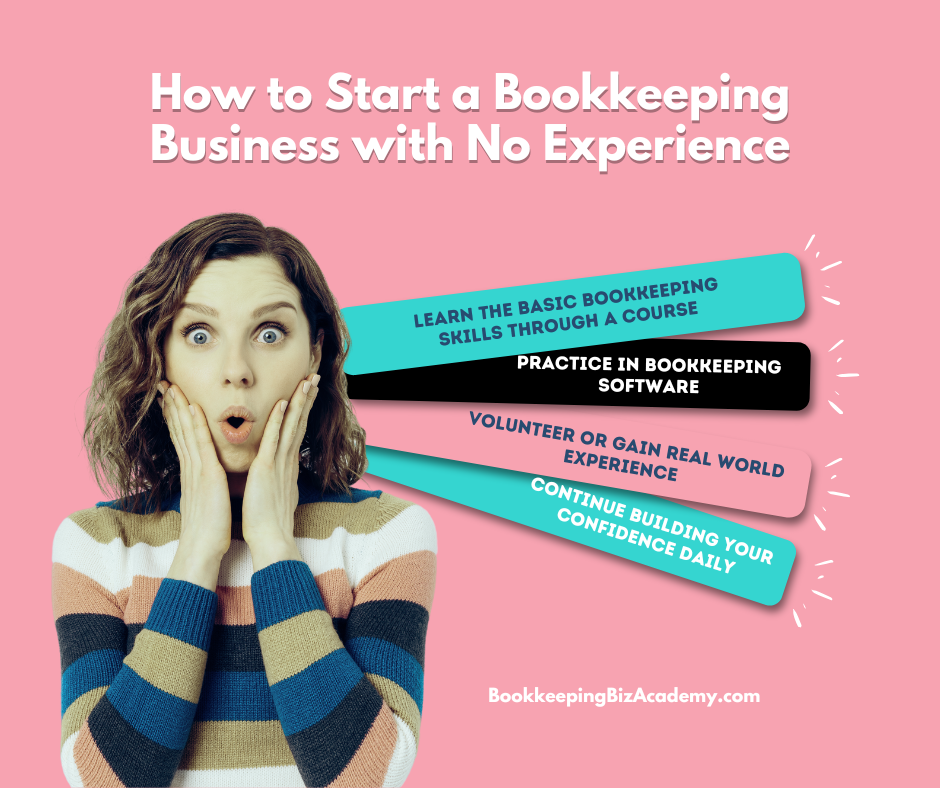
Gaining Experience: Practice and Niche
One concern newbies often have is how to get bookkeeping experience. The good news is you can learn and even earn at the same time.
Volunteer or Barter
Offer your bookkeeping services for free or a reduced rate to a friend, family member, church, or local nonprofit. This real-world practice helps you learn and builds your confidence. Often, people are grateful and may refer you when they pay you later or if they have coworkers in need. Think of anyone in your network who’s started a small venture. You can even practice on your own finances or set up dummy entries to simulate client work.
Specialize in a Niche
You don’t have to pick a niche but it is definitely recommended. It helps with efficiencies, marketing and understanding one niche. Look for client types you’re comfortable with or that have simple bookkeeping needs. Some popular niches for beginners include creative businesses and solopreneurs like Etsy crafters, wedding photographers, hair or music teachers, fitness instructors, tutors and coaches. These clients often have simple transactions and appreciate professional help but aren’t used to hiring accountants. If you have any background in a field, you could also target small businesses in that industry.
Set Reasonable Scope
As a new bookkeeper, it’s wise to start with solopreneurs or very small teams. Single-employee businesses are usually simpler to manage than companies with lots of payroll. You can say yes to clients who have maybe just one or two employees or subcontractors and straightforward finances. This lets you learn on the job without being overwhelmed by complex payroll, multiple departments, or inventory issues.
Build Confidence Step by Step
Remember that each small success builds your confidence. Celebrate small wins like sending your first invoice, reconciling your first bank account, closing a client’s month cleanly. Those successes will come more often once you get started. And don’t hesitate to use forums or online groups for help. Many bookkeeping communities love to help newbies troubleshoot real questions.
By combining practice projects with a focus on easy niches and asking questions, you’ll grow quickly from no experience to “I know my stuff.”
Finding Your First Clients and Building a Niche
Knowing how to start a bookkeeping business with no experience also means knowing where to find your first paying clients. Here are some friendly ways to land clients:
Tap your Existing Network
Start by telling friends, family, and community members about your new bookkeeping service. Look at the people you come into contact with every day like friends, neighbors, fellow church or gym members who may have started a business and need a bookkeeper. For example, if your neighbor just launched an online shop or your cousin runs a daycare, offer them a free consultation or an audit of their books. Even if they aren’t ready, they might refer others.
Local Business Community
Join local business or networking groups. Attend small business meetups or chamber events. Hand out simple business cards or flyers. Many local restaurants, salons, or independent retailers appreciate a friendly bookkeeper. Walk in and ask if they ever feel stressed by bookkeeping, and you could offer a free first session or seminar. You can also email them directly to get the conversation started.
Online Platforms
Sites like Upwork, Freelancer.com, or Fiverr can connect you to clients, though competition can drive prices low. If you go this route, be clear about your pricing and qualifications, and consider it just one channel. Alternatively, Facebook marketplace or local Facebook groups can be surprisingly effective for service referrals. Just make sure to stay professional and perhaps focus on referrals over online bidding sites if you can.
Develop a Niche or Specialization
As you grow, think about finding a niche to distinguish yourself. For example, you could brand yourself as a bookkeeper for creative entrepreneurs, for specific trades, or for those using certain platforms. As you help clients in one niche, you’ll learn industry-specific bookkeeping details which makes you more valuable.
Landing that first paying client might take some effort, but take heart because many beginners sign their first clients even before finishing training. The key is simply to put yourself out there. Once you get going, clients lead to testimonials and referrals, which then bring more clients.
Building Confidence While Working from Home
Running a bookkeeping business from home has huge benefits like flexibility, being your own boss, spending more time with family. But it can also feel isolating at first. Here are some tips to build your confidence and stay motivated:
Create a Routine
Even at home, set regular office hours. This helps you separate work time from family time. Creating some structure prevents tasks from slipping. Having a quiet workspace, even a small corner or desk, will signal to your brain (and family) that you’re on the job.
Use Support Communities
Join groups of new bookkeepers. Being around peers who are also learning reminds you that everyone starts somewhere. Find buddies to study with or share wins.
Celebrate Progress
Every time you master a new skill or help a client, take a moment to acknowledge it. That feeling of knowing the information is clicking and that you are confident in knowing what to do now is powerful. Write down your progress so you can look back when you have doubts.
Balance and Mindset
Working from home means wearing many hats. It helps to mentally switch out of mom mode or spouse mode when you start your bookkeeping day. Some bookkeepers schedule a quick walk, coffee break, or even play a specific song to transition into work mode. Also, set boundaries like no bookkeeping on Sunday evenings to avoid burnout. Remember why you started. Maybe you started for family time, more money, or being your own boss. Keeping that goal in mind helps when you face nerves or slow days.
Keep Learning
Confidence comes from competence. Continue adding to that foundation by getting certifications, attending webinars, reading bookkeeping blogs. Each new bit of knowledge makes the work easier. Anyone can learn bookkeeping you just need to continue learning and put in the work. If you invest in yourself and keep moving forward, your confidence will grow naturally.
Remember, everyone starts somewhere. The most important step is starting. Ready through the home based bookkeeping business startup checklist to ensure you have all the pieces. Once you get going, momentum builds quickly. Starting a bookkeeping business with no experience may sound daunting, but with determination, learning and support, you can do it. Take inspiration from those who’ve gone before you, use the beginner-friendly tools available, and follow the course to build a successful bookkeeping business.
Frequently Asked Questions about How to Start a Bookkeeping Business From Home
Can I start a bookkeeping business with no experience?
Yes, you can start a bookkeeping business without previous professional bookkeeping experience, but you should have a solid understanding of bookkeeping before managing a client’s financial records. Start by learning the fundamentals, including categorizing transactions, reconciling bank and credit card accounts, managing accounts payable and receivable, understanding the chart of accounts, and reading basic financial statements.
You can build experience before taking on clients by working through practice companies, completing bookkeeping courses, and becoming comfortable with popular accounting software such as QuickBooks Online or Xero. You may also want to start with simpler clients before moving into businesses with more complicated bookkeeping needs.
Remember, clients aren’t necessarily looking for someone who has been a bookkeeper for 20 years. They want someone who is reliable, organized, knowledgeable, responsive, and capable of keeping their books accurate and up to date.
Do I need to be a CPA to start a bookkeeping business?
No, you generally do not need to be a CPA to start a bookkeeping business. Bookkeeping and public accounting are different services, and many successful bookkeeping business owners are not CPAs or accountants.
A bookkeeper may provide services such as categorizing transactions, reconciling accounts, maintaining the general ledger, managing accounts payable and receivable, cleaning up bookkeeping records, and preparing routine financial reports. You can also specialize in a particular accounting platform or industry.
However, there are limits to the services you should offer. Certain tax, audit, attestation, and other regulated accounting services may require licenses or professional credentials depending on your location and the type of work you’re performing.
When you’re getting started, clearly define your services and make sure you understand which services you are qualified and legally permitted to provide.
How much does it cost to start a bookkeeping business?
One advantage of starting a bookkeeping business is that the startup costs can be relatively low. You don’t need an office, employees, expensive equipment, or inventory to get started. Many bookkeepers launch their businesses from home using a computer and software they already own.
Your initial expenses might include registering your business, purchasing a domain and website hosting, professional liability insurance, bookkeeping software, secure file-sharing or document-storage tools, email, and basic marketing expenses.
You may also decide to invest in bookkeeping training or certifications, especially if you’re starting without previous experience.
Instead of purchasing every possible tool immediately, consider starting with the essentials and adding software as you gain clients. Your first goal should be creating a professional, secure system that allows you to serve your first few clients effectively without loading your new business with unnecessary monthly expenses.
How do I get my first bookkeeping client with no experience?
Getting your first bookkeeping client can feel like one of the hardest parts of starting a bookkeeping business, especially when you don’t have testimonials or a long track record yet. One way to make the process easier is to choose a specific type of business you want to serve rather than trying to market your services to everyone.
For example, you might specialize in bookkeeping for contractors, real estate professionals, therapists, law firms, restaurants, or another industry you understand. Learn the common bookkeeping challenges businesses in that industry face and build your marketing around solving those problems.
Then actively put yourself in front of potential clients through LinkedIn, networking groups, referrals, local businesses, industry associations, Facebook groups, and personalized outreach.
You don’t need hundreds of prospects to get started. You need a consistent system for identifying the right businesses, starting conversations, and showing potential clients how your bookkeeping services can help them.
How long does it take to make money from a bookkeeping business?
There isn’t a guaranteed timeline for making money with a bookkeeping business. Some new bookkeepers land a client relatively quickly, while others spend several months learning bookkeeping, developing their services, choosing a niche, and figuring out how to market themselves.
One of the biggest factors is how you approach client acquisition. Creating a website and posting occasionally on social media doesn’t necessarily mean potential clients will find you. New bookkeeping business owners often need to actively reach potential clients through networking, referrals, LinkedIn, industry-specific outreach, and other prospecting strategies.
It can also help to create a simple monthly bookkeeping package rather than offering dozens of unrelated services. This makes it easier for potential clients to understand what they’re buying.
Focus first on becoming capable of delivering excellent bookkeeping work, and then create a repeatable system for finding and contacting prospective clients every week.
Recommended Reading…
Home Based Bookkeeping Business Startup Checklist



Add A Comment