
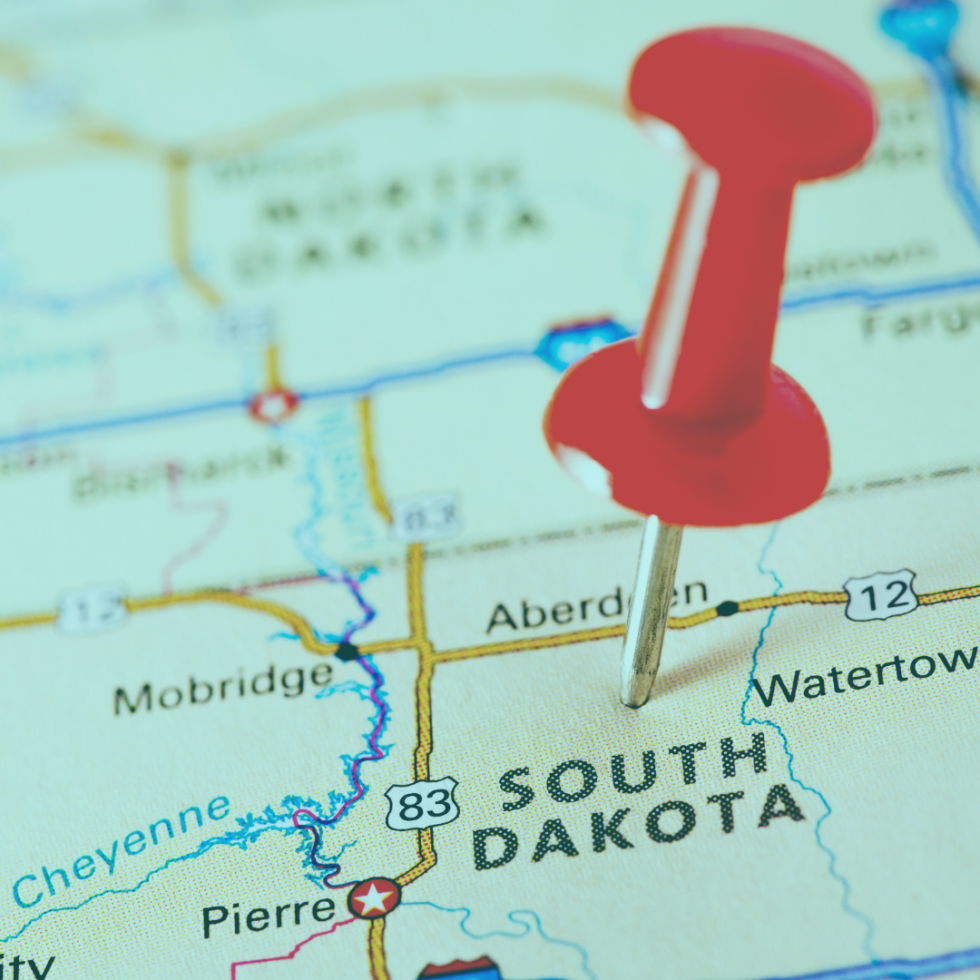
How to Start a Bookkeeping Business in South Dakota
If you have ever thought about building a business that gives you flexibility, predictability, and real income potential, learning how to start a bookkeeping business in South Dakota may be one of the best decisions you ever make. The Mount Rushmore State is one of the most business-friendly environments in the entire country, and for bookkeepers, that translates into exceptional opportunity.
South Dakota has no state income tax, no corporate income tax, and some of the lowest overall business costs in the nation — roughly 25% below the national average. This means more of every dollar you earn stays in your pocket, and the businesses you serve have every reason to stay and grow in the state, keeping your client base stable.
But beyond the favorable tax climate, South Dakota has something else working in your favor: a large and growing population of small business owners who genuinely need bookkeeping help. Farmers, ranchers, construction companies, retailers, healthcare practices, and tourism businesses all operate in the state — and virtually every single one of them needs accurate, organized financial records. Most of them are not doing that job well on their own.
This guide is written specifically for people who want to start and grow a bookkeeping business of their own — not for someone looking to hire a bookkeeper. If you are ready to build a service-based business that lets you work from home, set your own hours, and help the small business community around you, keep reading. Here is exactly how to do it.
Ready to Start Your Bookkeeping Business?
You don’t need everything figured out before you begin. The FREE 7-Day Bookkeeping Business Challenge walks you through the essential first steps with simple daily emails. Each lesson is designed for beginners who want clear, practical guidance on what to do next. Join today and start building your business with confidence.
Start the Free Challenge Today →Why South Dakota Is an Exceptional Place to Launch a Bookkeeping Business
Before diving into the mechanics of getting started, it is worth understanding why South Dakota specifically is such a strong launchpad for a bookkeeping business. Most guides gloss over state-level advantages, but they genuinely matter when you are pricing your services, setting up your business structure, and thinking about long-term growth.
No State Income Tax — Ever
South Dakota is one of only a handful of states with zero personal income tax and zero corporate income tax. For you as a business owner, that means the profit you generate is taxed only at the federal level. This single advantage can put thousands of extra dollars back in your pocket each year compared to running the same business in California, New York, or Minnesota.
A Diverse, Underserved Small Business Economy
South Dakota’s economy spans agriculture, tourism, financial services, healthcare, manufacturing, and retail. Cities like Sioux Falls and Rapid City are seeing consistent population and business growth. In fact, the Sioux Falls metro area adds roughly 2,000 workers to its labor force every year. All of those new businesses and expanding employers need bookkeeping support, and many of them cannot afford a full-time accountant on staff. That gap is exactly where a solo or small bookkeeping firm can thrive.
A Trusting, Relationship-Based Business Culture
South Dakota has a strong small-town and community-oriented business culture, even in its larger cities. Referrals travel fast. When you do outstanding work for one client, that reputation spreads. This environment rewards consistent, reliable service — which is the core of what bookkeepers do.
Low Cost of Living Means Lower Overhead
Because the cost of living in South Dakota is well below the national average, you can operate a lean, profitable bookkeeping business without needing a massive client roster. Many bookkeepers in higher cost-of-living states must charge more just to survive. In South Dakota, you have room to build a profitable business with a relatively small number of high-quality clients.
Build Your Bookkeeping Skills and Knowledge Foundation
The first step in understanding how to start a bookkeeping business in South Dakota is making sure you have the skills to do the work well. This does not mean you need a four-year accounting degree. Many successful bookkeeping business owners come from a wide range of backgrounds — administrative work, retail management, teaching, and more.
What you do need is a solid working knowledge of the fundamentals: how to categorize transactions, reconcile bank accounts, manage accounts payable and receivable, run basic financial reports, and understand payroll basics. You also need to become proficient in at least one major bookkeeping software platform.
Core Skills Every Bookkeeping Business Owner Needs
- Understanding of debits, credits, and double-entry bookkeeping
- Bank reconciliation and account management
- Accounts payable and accounts receivable management
- Basic payroll processing knowledge
- Sales tax tracking (important in South Dakota, which has a 6.2% combined sales tax rate in most areas)
- Financial statement preparation: profit and loss, balance sheet, cash flow
- Proficiency in QuickBooks Online and/or Xero
Should You Get Certified?
Getting a bookkeeping certification is not legally required to start a bookkeeping business in South Dakota, but it is a smart investment in your credibility. The two most recognized certifications are the Certified Bookkeeper (CB) designation from the American Institute of Professional Bookkeepers (AIPB) and the QuickBooks ProAdvisor certification, which you can earn for free through Intuit’s training portal.
Certifications signal to prospective clients that you take your craft seriously. They also give you something concrete to point to when you are building your first client base and do not yet have a long list of testimonials. If you are new to bookkeeping entirely, platforms like Bookkeeper Launch, AccountingCoach, or community college coursework can give you a strong foundation before you open your doors.
Register Your Business and Handle Legal Setup
Once your skills are in place, it is time to make your bookkeeping business official. Learning how to start a bookkeeping business in South Dakota means understanding the state’s specific registration process, which is refreshingly simple and affordable.
Choose Your Business Structure
The two most common structures for a solo bookkeeping business are the sole proprietorship and the single-member LLC. Most bookkeeping business owners are best served by forming an LLC for a straightforward reason: liability protection. As a bookkeeper, you are handling sensitive financial data and making recommendations that affect your clients’ businesses. If a dispute ever arises, having your personal assets legally separated from your business assets is important protection.
An LLC in South Dakota offers pass-through taxation (your business income flows to your personal tax return) combined with the liability shield of a formal business entity. It is the best of both worlds for most solo service providers.
How to Form Your LLC in South Dakota
Forming an LLC in South Dakota involves filing Articles of Organization with the South Dakota Secretary of State. The current filing fee is $150 for online filing. The process is straightforward and can typically be completed within a few business days. Here is what you will need:
- A business name that is distinguishable from other registered businesses in South Dakota (check availability through the SD Secretary of State’s Business Name Search tool)
- A registered agent — a person or service with a physical South Dakota address to receive legal documents on behalf of your business
- Articles of Organization completed and filed online at sdsos.gov
- An Employer Identification Number (EIN) from the IRS, which you can obtain for free at irs.gov
Annual Compliance in South Dakota
South Dakota LLCs and corporations are required to file an annual report with the Secretary of State. You will receive a postcard from the state to your registered agent reminding you of the filing. The annual report fee is $50. This is one of the lowest ongoing compliance costs of any state in the country.
Do You Need a Business License?
South Dakota does not require a general statewide business license for most service businesses, including bookkeeping. However, you should check with your specific city or county, as some municipalities require a local business license or registration. In Sioux Falls and Rapid City, for example, there may be local registration requirements. Check with your city’s business licensing office to confirm.
Do You Need a CPA License to Offer Bookkeeping Services?
No. Bookkeeping is not a licensed profession in South Dakota or in any U.S. state. You do not need a CPA license to provide bookkeeping services. A CPA license is required only if you are offering attest services — things like audits, reviews, and compilations. Bookkeepers record and organize financial data; CPAs certify and audit it. You can run a full-service bookkeeping firm in South Dakota without any professional license beyond your business registration.
Set Up Your Business Operations
Having a properly formed business is just the foundation. The next layer of learning how to start a bookkeeping business in South Dakota is building the operational infrastructure that lets you serve clients professionally from day one.
Open a Dedicated Business Bank Account
This is non-negotiable. You must keep your personal and business finances completely separate. Commingling funds can void the liability protection your LLC provides — a concept known as ‘piercing the corporate veil.’ Use your EIN and LLC formation documents to open a business checking account at a local South Dakota bank or credit union. Many banks offer free or low-cost business checking accounts for small businesses.
Choose Your Bookkeeping Software
The two most widely used platforms by bookkeeping businesses are QuickBooks Online and Xero. Both offer accountant or partner programs that give you access to multiple client files from a single dashboard, discounted or free software, and certification training.
- QuickBooks Online: The most widely used bookkeeping platform in the U.S. Most clients you encounter will already be using it or will be familiar with it. The QuickBooks ProAdvisor program gives you access to free software for your own firm and discounted pricing for clients.
- Xero: Growing rapidly, especially among tech-savvy clients and those who prefer a cleaner interface. Xero’s partner program offers similar benefits to QuickBooks.
- Wave: A free option for very small or budget-conscious clients. Not ideal for complex businesses, but useful for simple accounts.
Consider becoming certified in at least one platform before you start marketing. It will give you confidence and credibility.
Set Up Your Home Office or Remote Work Setup
One of the great advantages of a bookkeeping business is that it is entirely location-independent. You need a reliable computer, a high-speed internet connection, a secure cloud storage solution for client files, and a quiet, organized workspace. Most bookkeeping business owners operate entirely from home, which keeps overhead extremely low.
For security and professionalism, invest in:
- A password manager (LastPass, 1Password) for client account access
- Two-factor authentication on all platforms
- Encrypted cloud storage (Google Drive with proper sharing settings, or a client portal like TaxDome or Canopy)
- A dedicated work email through Google Workspace or Microsoft 365
- A contract template and engagement letter reviewed by an attorney
Get Business Insurance
Even though you are not legally required to carry insurance to practice bookkeeping in South Dakota, two types of coverage are strongly recommended. General liability insurance protects you if a client claims property damage or personal injury related to your business. Errors and omissions (E&O) insurance — also called professional liability insurance — protects you if a client claims financial harm as a result of a mistake in your bookkeeping work. E&O insurance for bookkeepers is typically quite affordable, often starting around $25 to $50 per month.
Define Your Niche and Service Offerings
One of the biggest mistakes new bookkeeping business owners make is trying to serve everyone. Generalist bookkeepers compete on price. Specialist bookkeepers compete on expertise — and command significantly higher rates.
South Dakota’s economy hands you several natural niche opportunities.
Strong Niche Markets in South Dakota
- Agriculture and farming: South Dakota is one of the top agricultural states in the country. Farmers, ranchers, and ag-tech businesses all need bookkeeping that understands crop insurance proceeds, equipment depreciation, seasonal cash flow, and farm-specific tax issues.
- Tourism and hospitality: With over 3 million visitors annually to the Black Hills and Mount Rushmore region, there is a substantial hospitality economy around Rapid City that needs bookkeeping support — hotels, restaurants, tour operators, and retail shops.
- Construction trades: One of the fastest-growing industries in the state, with a need for job costing, contractor management, and sales tax compliance.
- Healthcare: Sioux Falls is anchored by major healthcare systems like Sanford Health and Avera Health. Private practices, medical billing services, and health tech startups in the region need specialized financial management.
- Professional services: Attorneys, consultants, real estate agents, and insurance brokers need clean books but rarely have time to manage them.
- E-commerce and online businesses: A growing segment across the state that needs transaction reconciliation, sales tax compliance, and inventory management.
Picking one or two of these niches and becoming the go-to bookkeeper for that type of client is a far faster path to a full client roster and premium pricing than trying to serve everyone at once.
Build Your Service Menu
Your core service offering will likely include monthly or quarterly bookkeeping packages. Here is how to think about structuring them:
- Basic package: Transaction categorization, bank reconciliation, monthly financial statements — ideal for very small businesses with low transaction volume
- Standard package: Everything in basic, plus accounts payable management, invoicing support, and monthly review calls
- Premium package: Everything in standard, plus payroll management, sales tax filing, and quarterly business reviews
Price your packages based on monthly transaction volume and complexity, not by the hour. Flat-rate monthly retainers give your clients cost predictability and give you income stability — the foundation of a sustainable business.
Price Your Services Strategically
Pricing is one of the areas where new bookkeeping business owners leave the most money on the table. The most important shift you can make is moving away from hourly billing toward value-based, flat-rate monthly pricing.
What Do Bookkeepers Charge in South Dakota?
Rates vary based on experience, niche, and service complexity. As a general benchmark, freelance bookkeepers in South Dakota typically charge between $30 and $75 per hour when billing hourly. Monthly retainer packages tend to range from $200 to $800 per month for small businesses, with more complex clients — those with payroll, sales tax, or high transaction volumes — often paying $1,000 or more per month.
When you are just starting out, you may need to price slightly below market to attract your first clients and build testimonials. However, avoid underpricing so severely that you attract clients who expect the world for nothing. A better strategy is to offer a time-limited introductory rate for your first two or three clients with the explicit expectation that rates will increase once the initial engagement period ends.
How to Raise Prices as You Grow
Build annual rate increases into your client contracts. A 5% to 10% annual increase is reasonable and expected in service businesses. Communicate increases clearly and early — 60 days’ notice is professional and considerate. Clients who value your work will stay; clients who leave over small increases were likely never profitable long-term clients anyway.
Market Your Bookkeeping Business in South Dakota
Getting clients is the lifeblood of your bookkeeping business. Understanding how to start a bookkeeping business in South Dakota requires a plan for reaching the right people — small business owners who need your help and are ready to pay for it.
Build a Professional Website
Your website is your 24/7 salesperson. It should clearly explain who you serve, what you offer, and how to get started. Include a services page, a clear pricing page (even if it is a ‘starting at’ range), an about page that speaks to your experience and approach, and a contact page with a simple intake form.
For South Dakota bookkeepers, local SEO is a powerful and underutilized strategy. Optimize your website for search terms like ‘bookkeeper for small business in Sioux Falls’ or ‘bookkeeping services Rapid City.’ Create location-specific content, set up and optimize a Google Business Profile, and gather Google reviews from every satisfied client.
Leverage Local Business Networks
South Dakota’s business community is tight-knit and relationship-driven. These offline networking strategies can be among the fastest ways to fill your client roster:
- Join your local Chamber of Commerce — both in Sioux Falls and Rapid City, the Chambers are active and well-attended
- Attend BNI (Business Network International) chapters in your area — one bookkeeper per chapter, so if you get a seat, you get all the referrals from that group
- Connect with local CPAs and tax preparers — they regularly refer bookkeeping work to trusted bookkeepers, since it is outside the scope of what they want to handle
- Introduce yourself to local banks and credit unions — loan officers often work with businesses that need bookkeeping help as a condition of financing
- Attend industry-specific trade events for your chosen niche (agricultural conferences, contractor expos, tourism association meetings)
Use Content Marketing for Long-Term Growth
A blog and SEO strategy built around questions your ideal clients are searching for can generate a consistent stream of warm inbound leads over time. Write articles answering questions like ‘Do I need a bookkeeper for my South Dakota farm?’ or ‘How do I track sales tax for my Sioux Falls retail shop?’ Position yourself as the local expert, and potential clients will find you before they ever look at a competitor.
Ask for Referrals — Systematically
Your happiest clients are your best salespeople. Do not wait for referrals to happen organically. After a successful engagement, send a simple email asking if the client knows other business owners who might benefit from bookkeeping support. Offer a referral incentive — a discount on their next month’s invoice — to make it worth their while.
Understand South Dakota Tax Obligations for Your Business
Even though South Dakota has no state income tax, you still have tax obligations as a business owner. Here is what you need to understand.
Federal Self-Employment Taxes
As a self-employed bookkeeper operating as a sole proprietor or single-member LLC, you will pay self-employment tax (15.3% on net earnings up to a threshold) in addition to federal income tax. Consider making quarterly estimated tax payments to avoid penalties at year-end. A good rule of thumb is to set aside 25% to 30% of every client payment for taxes until you have a firmer handle on your effective tax rate.
South Dakota Sales Tax — Does It Apply to Bookkeeping?
South Dakota’s sales tax laws are worth understanding carefully. South Dakota does impose sales tax on certain services. As of the time of writing, bookkeeping and accounting services may be subject to South Dakota’s sales tax. You should consult with a South Dakota CPA or contact the South Dakota Department of Revenue to confirm whether your specific services are taxable under the state’s current guidance. The baseline combined sales tax rate in most of the state is 6.2%, and timely remittance is required if applicable.
Keep Meticulous Records — You Are the Bookkeeper
There is a particular irony that bookkeepers are sometimes the worst at keeping their own books. Do not fall into this trap. Use your bookkeeping software to manage your own firm’s finances with the same care you bring to client work. Track every expense, invoice every client on time, reconcile your own accounts monthly, and review your profit and loss statement quarterly. Your business finances are your proof of concept — if you cannot manage your own books, why would a client trust you with theirs?
Scale Your Bookkeeping Business Over Time
The ultimate goal of learning how to start a bookkeeping business in South Dakota is not just to replace your income — it is to build an asset that can grow well beyond what you can do alone. Here is how to think about scaling.
Build Systems Before You Need Them
The time to document your processes is before things get chaotic, not after. Create written procedures for onboarding new clients, categorizing transactions, reconciling accounts, and delivering monthly financial reports. These documents serve two purposes: they keep your own work consistent, and they become the training materials you hand to a subcontractor or employee when you are ready to grow beyond your own capacity.
Hire Contractors Before Employees
When you are ready to take on more clients than you can handle alone, bringing on a virtual bookkeeping contractor is typically the easiest first step. Platforms like Upwork, LinkedIn, and bookkeeping-specific networks can help you find qualified candidates. Make sure any contractor agreements address confidentiality, data security, and the scope of work clearly.
Add Adjacent Services
As your client relationships deepen, opportunities to offer additional value-added services will emerge naturally. Payroll processing, sales tax filing, accounts receivable management, and CFO-level advisory services are all natural extensions of a bookkeeping relationship. These services command higher fees and deepen client stickiness — clients who trust you with multiple functions are far less likely to leave.
Think About Your Revenue Model
A bookkeeping business with 20 clients at an average of $500 per month generates $10,000 per month in recurring revenue — $120,000 per year. With a team of contractors handling the execution, your role becomes quality review, client relationships, and business development. That is a very achievable model for a South Dakota bookkeeping business owner who starts small and scales with intention.
Resources Available to South Dakota Bookkeeping Business Owners
South Dakota offers several resources that can support you as you build your business. You do not have to navigate this alone.
- South Dakota Small Business Development Center (SD SBDC): Free business consulting, market research assistance, and training workshops for entrepreneurs at all stages. Available at sdsbdc.evansville.edu.
- South Dakota Secretary of State Business Services: Business registration, name searches, and compliance information at sdsos.gov.
- South Dakota Governor’s Office of Economic Development (SD GOED): Resources on financing, incentives, and business development statewide.
- IRS Small Business and Self-Employed Tax Center: Federal tax guidance specifically for self-employed individuals and small business owners.
- QuickBooks ProAdvisor Program: Free certification and software access for bookkeepers and accountants.
- American Institute of Professional Bookkeepers (AIPB): Professional development, certification, and resources for practicing bookkeepers.
- Local Chambers of Commerce: Sioux Falls Area Chamber of Commerce and Rapid City Area Chamber of Commerce are both active networking hubs.
Final Thoughts: Your Bookkeeping Business Starts With One Decision
Every thriving bookkeeping business in South Dakota started exactly where you are right now — at the beginning, with a willingness to learn, take action, and show up for clients consistently. The state’s business climate will work in your favor. The demand is there. The barriers to entry are genuinely low. And the skills, while they take time to develop, are absolutely learnable.
Understanding how to start a bookkeeping business in South Dakota is really about taking each step one at a time: build your skills, register your business properly, set up your operations, choose a niche, price your services with confidence, and then get in front of the people who need your help. Repeat that process, improve it over time, and you have the foundation of a business that can give you the income and the freedom you are after.
The question is not whether there is a market for bookkeeping services in South Dakota. There absolutely is. The question is whether you are willing to do the work to claim your piece of it. If the answer is yes, the path forward is clear.
Frequently Asked Questions about How to Start a Bookkeeping Business From Home
Do I need a degree in accounting to start a bookkeeping business in South Dakota?
No, you do not need a degree in accounting to start a bookkeeping business in South Dakota. Bookkeeping is an unregulated profession in all 50 states, including South Dakota. What matters is competency — you need to understand the fundamentals of bookkeeping, be proficient in bookkeeping software, and be able to produce accurate financial records for your clients. Many successful bookkeeping business owners come from non-accounting backgrounds and built their skills through online courses, self-study, and certifications like the QuickBooks ProAdvisor or the Certified Bookkeeper designation from the AIPB. A practical, skills-based approach to education — combined with real-world experience — is entirely sufficient to run a professional and profitable bookkeeping business. That said, if you have accounting coursework or a related degree, it will certainly give you a head start, especially when pursuing clients in more complex industries like healthcare, construction, or financial services.
How much does it cost to start a bookkeeping business in South Dakota?
The startup costs for a bookkeeping business in South Dakota are among the lowest of any service business you could launch. The primary fixed cost is your LLC formation filing fee, which is currently $150 through the South Dakota Secretary of State, plus a $50 annual report fee each year thereafter. Beyond that, your main startup expenses include bookkeeping software (QuickBooks Online runs approximately $30 to $100 per month depending on the plan, though the ProAdvisor program offers free access for accounting professionals), business insurance (roughly $25 to $75 per month for E&O and general liability), a professional website (anywhere from free using platforms like Wix to several hundred dollars for a professionally designed site), and any certification courses you choose to take. All told, most bookkeeping businesses can be launched in South Dakota for somewhere between $500 and $2,000 in initial startup costs, with ongoing monthly overhead well under $300 if you are operating lean from a home office. This is a remarkably low-cost path to self-employment.
How do I find my first bookkeeping clients in South Dakota?
If you are wanting to know how to start a bookkeeping business anywhere, one of the first questions is usually about finding clients. Finding your first clients is the most common challenge new bookkeeping business owners face, and it is entirely solvable with the right approach. Start with your immediate network — friends, family, former colleagues, and professional contacts who own businesses or know people who do. A direct conversation or a thoughtful message explaining what you are offering and who you help is surprisingly effective at the beginning. From there, the fastest path to building a client base in South Dakota is local networking. Joining your area’s Chamber of Commerce, attending BNI (Business Network International) meetings, and building referral relationships with local CPAs, tax preparers, and business bankers are all proven strategies. CPAs in particular are an excellent referral source — many of them do not want to handle day-to-day bookkeeping for small clients, and they will send that work to a bookkeeper they trust. For longer-term growth, invest in a professional website with local SEO, a Google Business Profile, and a content strategy that answers the questions your ideal South Dakota clients are searching for online.
Is bookkeeping a good business to start in South Dakota specifically?
Bookkeeping is an excellent business to start in South Dakota for several reasons that are specific to the state. First, South Dakota’s no-income-tax environment means you keep more of your earnings than you would in most other states, which dramatically improves the profitability of a service business. Second, the state’s diverse small business economy — spanning agriculture, construction, tourism, healthcare, and professional services — creates a wide range of potential clients, many of whom are underserved by the current bookkeeping market. Third, South Dakota’s lower cost of living means you need fewer clients to replace a full-time income, which makes the ramp-up phase of your business much more manageable. Fourth, the state’s business-friendly culture and tight-knit community networks make relationship-based marketing — the most effective form of marketing for a bookkeeping business — particularly effective. Taken together, South Dakota offers a combination of favorable economics, strong demand, and a supportive business environment that makes it one of the better states in the country to launch a bookkeeping business from scratch.
How long does it take to build a full-time income from a bookkeeping business in South Dakota?
The timeline for building a full-time income from a bookkeeping business in South Dakota varies depending on how aggressively you market, how much prior experience you have, and how efficiently you build your operations. Realistically, most people who are focused and consistent can replace a modest full-time income — in the range of $50,000 to $60,000 per year — within 12 to 24 months of launching. That typically means building a roster of 10 to 15 monthly retainer clients at an average of $300 to $500 per month. The first few clients often take the longest to land because you are building your credibility and your process from scratch. Once you have two or three happy clients who are actively referring others, the growth tends to accelerate. Bookkeepers who specialize in a specific industry niche, invest in a professional website with local SEO, and build referral relationships with CPAs and bankers tend to reach full-time income status faster than those who take a generalist, reactive approach. A profitable, well-run bookkeeping service can be achieved within 6 to 18 months for motivated, focused business owners.



Add A Comment